Somewhere in the vast history of game development, someone finally asked the question that has tormented humanity for generations:
What if Happy Feet contained an ancient, slumbering god?
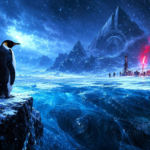
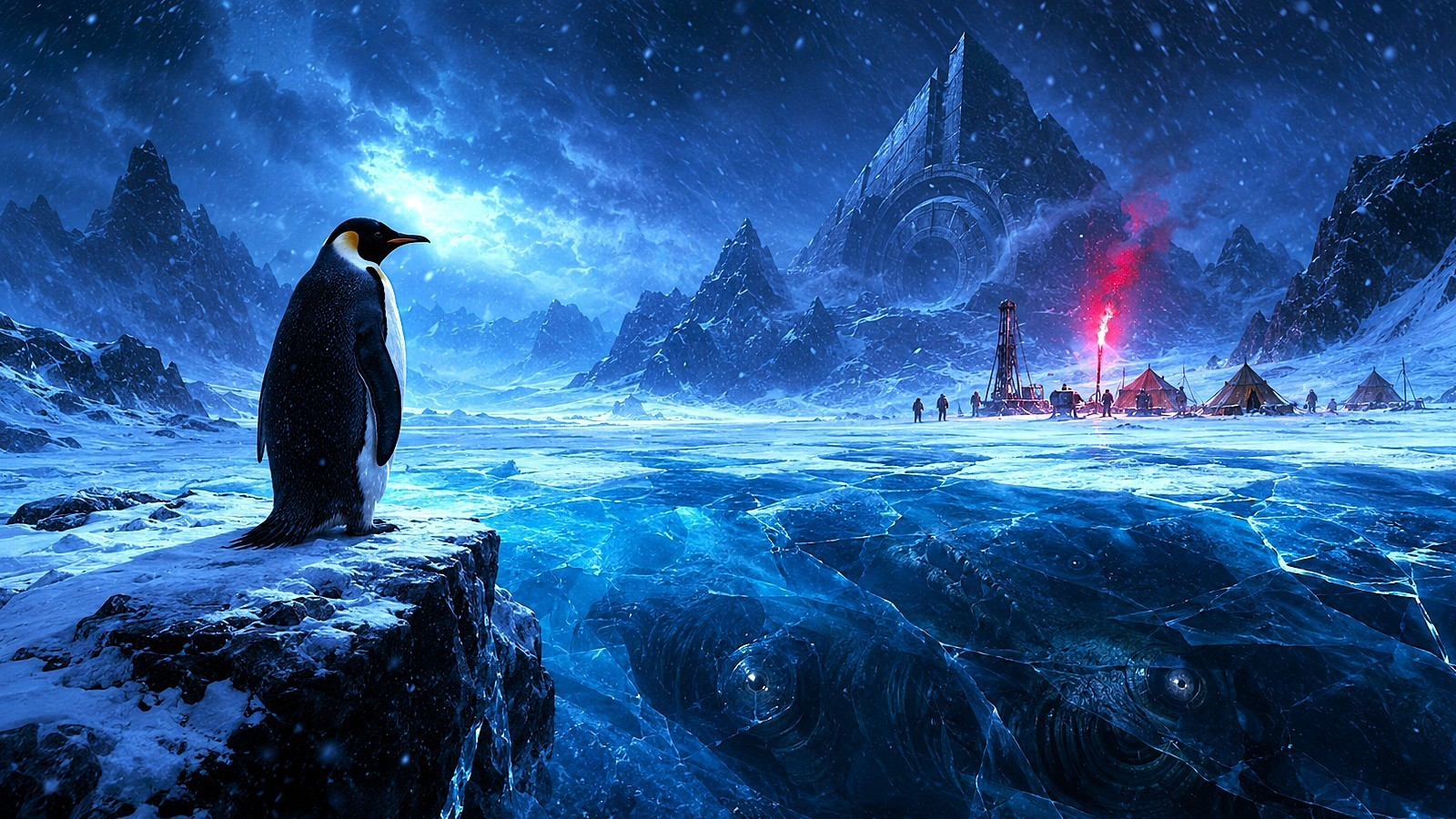
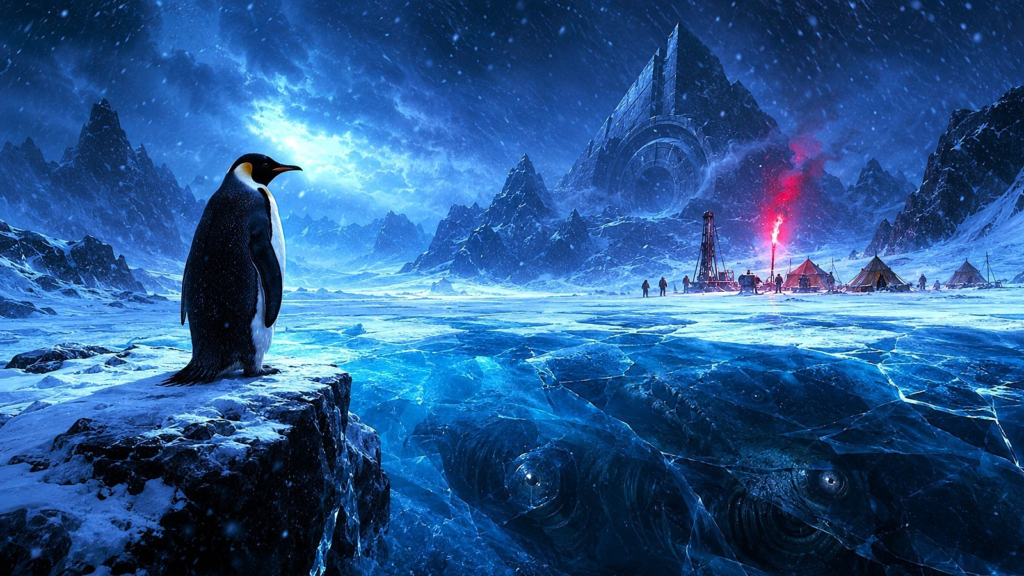
That person was Naphtali Faulkner, founder of ORIGAME DIGITAL and creator of Umurangi Generation. While watching Happy Feet with his daughter, Faulkner noticed that the scene in which an excavator falls into the ocean possessed a strangely eldritch quality. That observation eventually grew into Penguin Colony, an upcoming psychological horror game that combines penguins, Nazis, Antarctic exploration, colonialism, H.P. Lovecraft, and the creeping suspicion that something beneath the ice has been dreaming about us.
It may be the only game of 2026 in which waddling is both a movement mechanic and a legitimate response to cosmic terror.
Affiliate disclosure: This review contains Amazon affiliate links. If you make a qualifying purchase through one of these links, Weird Howard Productions may receive a commission at no additional cost to you. As an Amazon Associate, we earn from qualifying purchases.
Antarctica Was Cosmic Horror Before Cosmic Horror Had a Name
Antarctica is almost perfectly designed for horror. It is enormous, ancient, isolated, difficult to survive, and filled with places no human being has ever personally examined.
Its frozen landscape creates the illusion of emptiness, but emptiness is never truly empty in cosmic horror. It is merely hiding something.
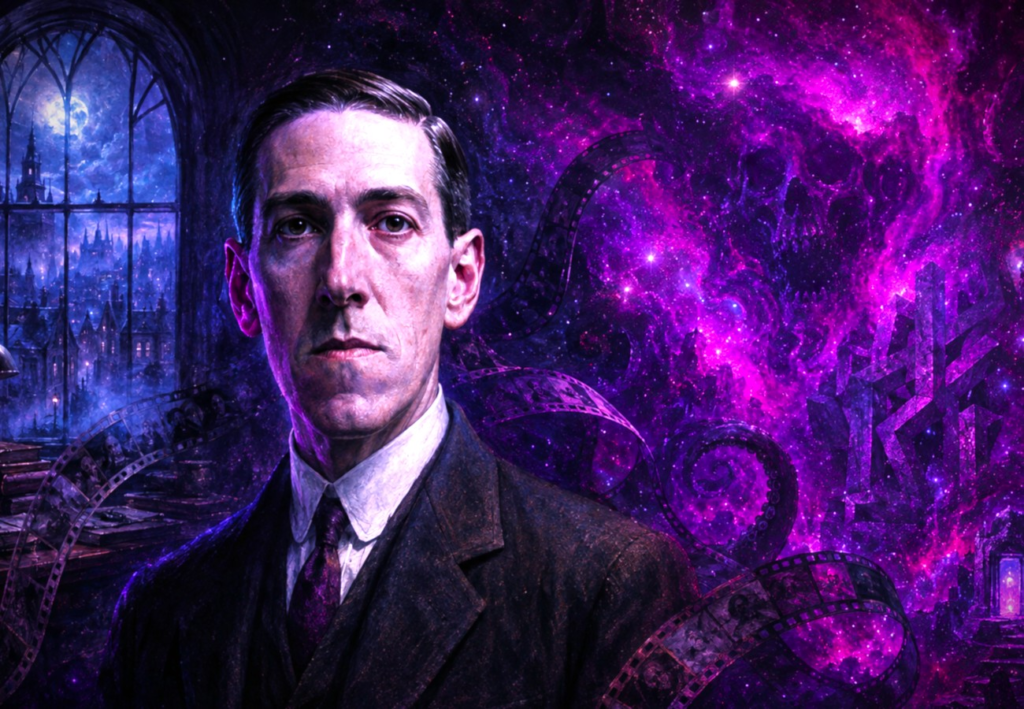
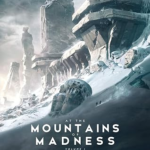
H.P. Lovecraft established much of this formula with At the Mountains of Madness. Written in 1931 and published in 1936, the story follows a scientific expedition from Miskatonic University that discovers evidence of an alien civilization beneath the Antarctic ice. What begins as scientific exploration becomes a confrontation with a history of Earth that existed long before humanity.
The horror does not come merely from discovering monsters. It comes from learning that human beings arrived terribly late to the story.
You can read our full review of François Baranger’s extraordinary illustrated edition of At the Mountains of Madness for a deeper descent into Lovecraft’s frozen nightmare.
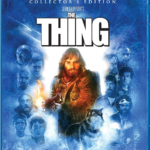
Antarctica returned as a place of unknowable biological horror in John Carpenter’s The Thing. A remote research station becomes a locked room when an organism capable of imitating any living creature infiltrates the crew. The surrounding snow is not simply scenery. It prevents escape, destroys communication, and turns suspicion into a survival instinct.
Our review of The Thing examines how the film nearly destroyed John Carpenter’s career before becoming a horror masterpiece.
Penguin Colony clearly understands this lineage. The developers even recreated the title sequence from The Thing using practical effects for the game’s opening. But instead of placing us inside another doomed group of human explorers, the game changes the perspective completely.
This time, we are watching the humans from below.
This time, we are a penguin.
Watch the trailer for Penguin Colony here:
Developer and publisher Fellow Traveller describes the game as cosmic horror seen through the indifferent eyes of a penguin. This may be the most Lovecraftian part of the entire concept. The penguins do not necessarily understand the entity, but they also do not require the universe to be organized around human importance.
Humanity may be descending into madness.
The colony still has penguin business to conduct.
Waddle, Slide, Swim, Investigate
Movement is built around the physical behavior of the birds. Penguins do not sprint across Antarctica like conventional action heroes. They waddle. They slide down slopes. They swim through freezing water. They struggle with terrain that another species might cross differently.
A hands-on preview from Nintendo World Report describes penguin movement as intentionally unusual. Sliding can be faster than walking, while different bodies affect speed, stamina, swimming, and access to confined areas.
That could have been played entirely as a joke. Instead, the awkward movement reinforces the game’s perspective. You are not a human being wearing a penguin-shaped costume. You have to approach the landscape as a penguin would.
This creates a form of environmental problem-solving that feels remarkably different from the usual collection of keys, switches, and colored doors. The question is not always, “Which tool do I possess?” Sometimes it is, “Which penguin should I become?”
That may be a sentence no cosmic horror game has ever required us to write before.
No Quest Marker Can Save You
Penguin Colony is built around open-ended exploration. There is no strict route through Antarctica and no prescribed order in which every discovery must be made.
Instead of following a glowing line across a minimap, players read the environment. A red flare may provide a distant destination. The direction of the wind can suggest movement. Sounds, weather, human structures, and unfamiliar activity draw the colony toward pieces of the larger mystery.
This is an excellent match for Lovecraftian storytelling. Lovecraft rarely gives his characters a clean explanation at the beginning of a story. Meaning accumulates through journals, architecture, testimony, artifacts, and discoveries that become more disturbing when connected.
In Penguin Colony, players find strange symbols that reveal individual words and fragments of an emerging language. These discoveries gradually connect the characters, locations, and events scattered across the ice.
The result is less like following a mission checklist and more like conducting a scientific expedition. Players observe, collect information, test routes, and attempt to assemble a coherent explanation from incomplete evidence.
The problem is that understanding the evidence may be exactly what destroyed the humans.
A Story Happening Across Time
The game’s narration is provided by Lenval Brown, whose voice will be instantly familiar to players of Disco Elysium. He portrays Howard Blakely, a man drawn toward the Antarctic interior by something he cannot explain.
As Blakely’s mind fractures, past, present, and future begin collapsing together. His monologues emerge as players explore abandoned structures and trace the movements of the expeditions. Time becomes less reliable as the ancient presence beneath the ice exerts its influence.
This connects Penguin Colony not only to At the Mountains of Madness, but also to Lovecraft’s The Shadow Out of Time, in which consciousness, identity, memory, and history become dangerously unstable.
The Horror of Extraction
Beneath the penguins and cosmic monsters, Penguin Colony appears to be telling a story about colonial power.
The expedition does not merely want to discover the ancient being. It wants to extract its power, convert it into a resource, and use it for destruction. The entity becomes another territory to conquer.
Faulkner has described the creature as a manifestation of colonial thought, energy, and power. It is something that rests, returns, and grows again. The horror is not only that an ancient force exists beneath Antarctica. The horror is that human beings encounter the incomprehensible and immediately begin discussing how to weaponize it.
The presence of the Kaitiaki creates a direct opposition. Their purpose is not to possess the entity but to prevent its exploitation and return it to sleep.
Meanwhile, the penguins serve as witnesses. They are the inhabitants of a landscape that outside powers have decided to treat as empty, available, and waiting to be claimed.
Suddenly the penguin perspective does not seem like a joke at all.
A Different Kind of Lovecraftian Game
Many Lovecraftian games rely on familiar imagery. There will be a private investigator, a coastal town, a sanity meter, a cult, several tentacles, and a suspiciously damp man standing near a fish market.
Penguin Colony is doing something far stranger.
Its protagonist is communal rather than individual. Its bodies function as exploratory tools. Its world is navigated through weather and observation instead of conventional directions. Its horror unfolds around the player while the player occupies a creature that may be more at home in this environment than any human being could ever be.
The game also uses a deliberately low-poly visual style reminiscent of the PlayStation 2 era. The simplified models and distant shapes create uncertainty in the snow. A figure on the horizon may be a person, a structure, another animal, or something that has not yet decided what form it should take.
Rather than attempting photorealism, the game leaves space for the player’s imagination to become hostile.
That is often where cosmic horror works best.
When Can We Join the Colony?
Penguin Colony is being developed by ORIGAME DIGITAL and published by Fellow Traveller. It is planned for release on PC through Steam and Nintendo Switch 2 in 2026. A playable demo is currently listed on Steam.
It is too early to know whether the complete game can turn this bizarre collection of mechanics, politics, penguins, and cosmic horror into a satisfying whole. That is why this is a preview rather than a review.
But originality deserves attention, and Penguin Colony already possesses something that cannot be manufactured through graphical fidelity or marketing budgets: a perspective we have never occupied before.
Lovecraft asked what might be buried beneath Antarctica.
John Carpenter asked whether the person beside us was still human.
Penguin Colony asks whether humanity’s final descent into madness might be witnessed by a small bird sliding rapidly downhill on its stomach.
At last, cosmic horror has found its most qualified protagonist.
A penguin.