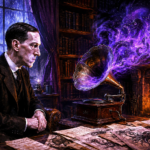
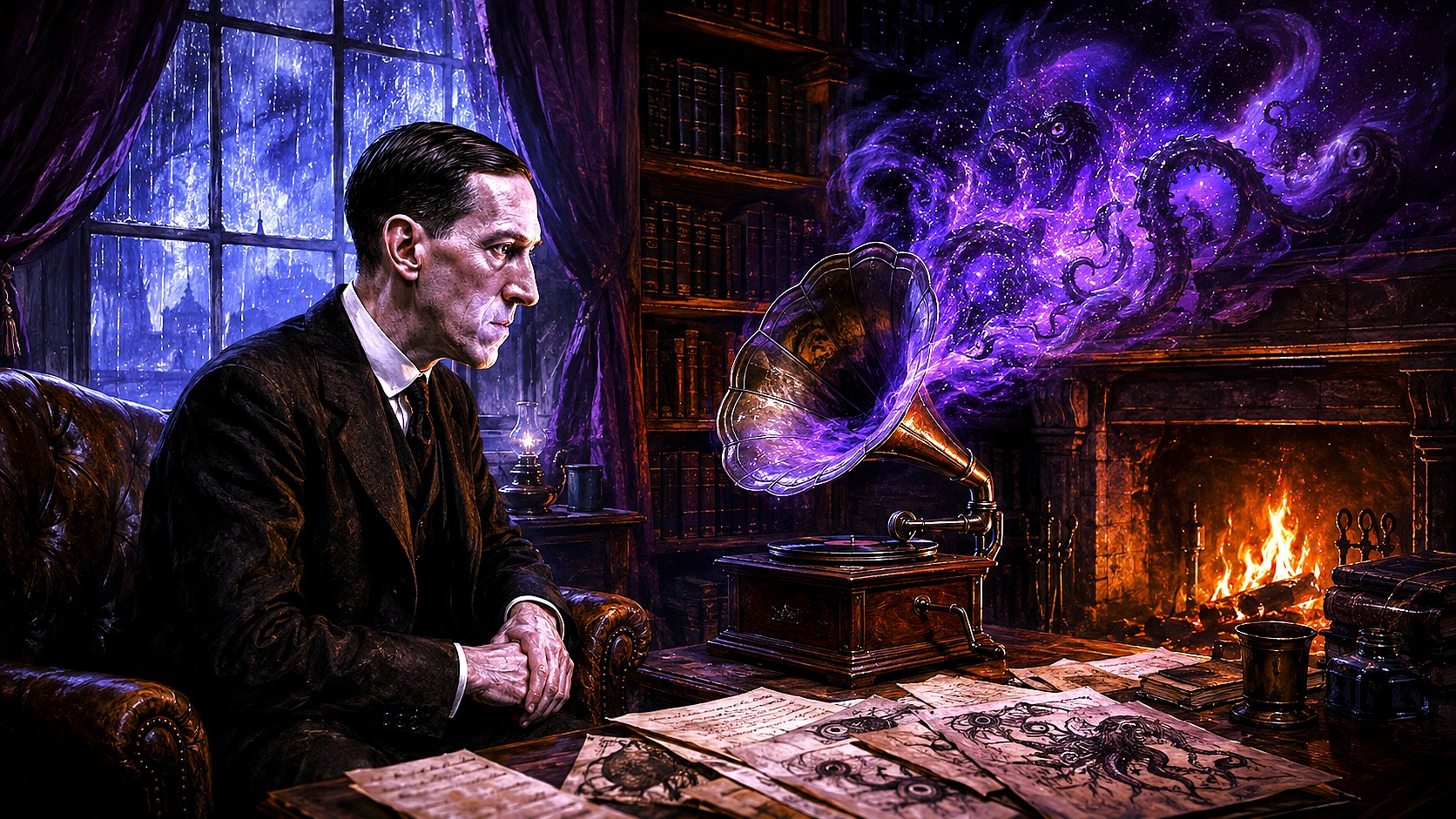
Rain presses against the windows in long, silver fingers. A fire crackles in the hearth, yet the room remains cold. In the darkness, an old gramophone turns beneath a trembling needle.
At first, there is only static.
Then the static begins to breathe.
A voice tells you about a river that remembers the dead. Another describes something moving beneath New York. Soon, you hear of forgotten gods, impossible tunnels, and memories that vanish as soon as they form.
This is where independent cosmic horror audiobooks come alive. Weird fiction has always carried the spirit of the fireside tale. A survivor returns from the darkness and tells us what happened. A skilled narrator does more than read that account. They become the witness, the investigator, or perhaps the thing pretending to be one.
This list celebrates independent authors, small presses, specialist weird-fiction publishers, and the performers who give their nightmares a voice. These artists take risks that larger companies often avoid. As a result, they keep modern Lovecraftian horror dangerous, personal, and wonderfully strange.
Draw the curtains. Pour something warm. Feed another log to the fire.
The first voice is ready to begin.
Affiliate disclosure: As an Amazon Associate, Weird Howard earns from qualifying purchases. This article contains affiliate links. We may earn a commission if you make a purchase or start an eligible Audible membership through one of these links. It will not increase your price.
Some titles may be included with an Audible membership at no extra charge. Availability and introductory offers can change. Therefore, check the current terms before joining. You can view the current Audible offer here.
1. The Fisherman by John Langan
Do Not Follow the River
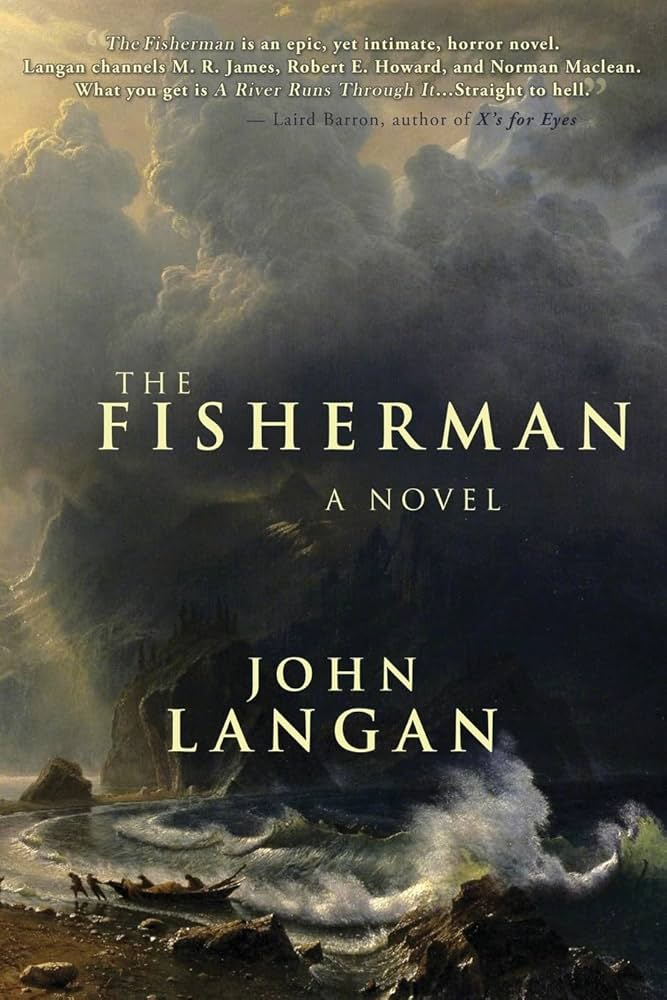
Published by independent horror press Word Horde, The Fisherman is a defining work of modern cosmic horror. It begins with grief and companionship. However, it soon opens into a mythology of drowned histories, forbidden resurrection, and an ancient figure who understands desperation.
Abe and Dan are widowers who find comfort in fishing. Rumors draw them toward Dutchman’s Creek, where the promise of recovering what they lost proves difficult to resist.
Langan never rushes toward the monster. Instead, he draws listeners downstream one memory at a time. By the time something moves beneath the water, turning back is no longer possible.
Narrated by Danny Campbell
Danny Campbell reads The Fisherman in the weathered voice of a man carrying a terrible memory. His calm, gravelly delivery fits Abe’s age, grief, and exhaustion.
Campbell avoids exaggerated character voices. Instead, he distinguishes people through rhythm, temperament, and subtle changes in tone. This approach supports the novel’s central tale, which feels like folklore passed down by someone who knows it is true.
Some listeners may prefer more vocal variation. Still, Campbell’s restraint gives the performance its power. He never announces the arrival of horror. He simply continues, as if the impossible has become another burden he must carry.
Why it matters: The Fisherman proves that independent horror can be intimate, literary, and apocalyptic at once.
Best for: Folklore, grief horror, maritime mythology, and stories within stories.
Listen to The Fisherman on Audible
2. The Worm and His Kings by Hailey Piper
Something Is Moving Beneath New York
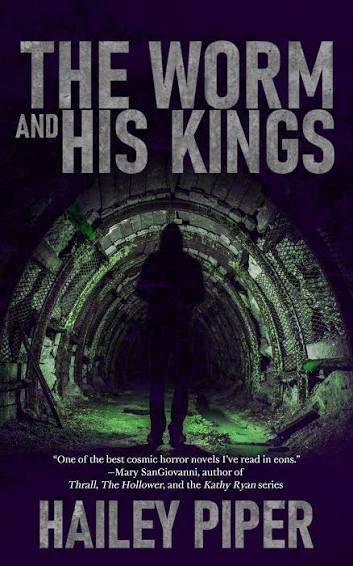
Originally published by Off Limits Press, The Worm and His Kings follows Monique beneath the streets of 1990s New York. She is searching for her missing girlfriend. Instead, she finds abandoned tunnels, strange creatures, and a cult serving powers that can reshape time and identity.
Hailey Piper gives the story a compassionate center. Monique does not enter the darkness because she wants forbidden knowledge. She enters because someone she loves is missing. Consequently, that love becomes a stubborn light in a place designed to consume it.
Narrated by Allyson Voller
Allyson Voller brings warmth to a story set inside cold tunnels. Her performance keeps Monique’s love, fear, and determination at the center, even when reality begins to collapse.
Voller creates distinct voices without turning the characters into caricatures. Her smooth delivery also helps listeners follow Piper’s increasingly surreal mythology.
Most importantly, she never allows Monique to become a passive witness. The universe may not care about her, but Voller makes certain that we do.
Why it matters: This queer cosmic horror story replaces fear of human difference with empathy and determination.
Best for: Subterranean monsters, cults, queer horror, and reality-altering mysteries.
Listen to The Worm and His Kings on Audible
3. The Secret of Ventriloquism by Jon Padgett
The Dummy Has Been Waiting
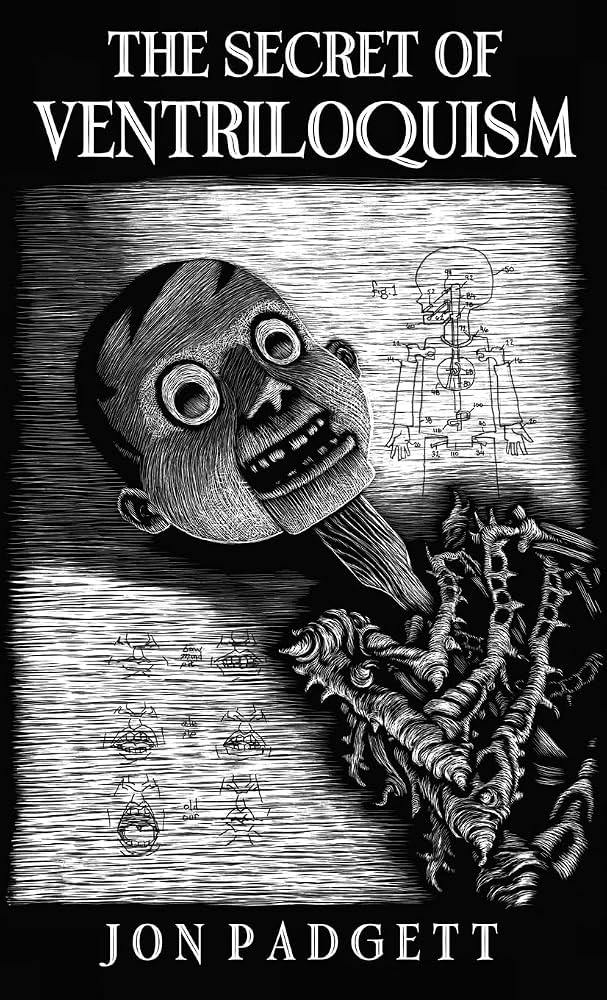
Originally published by Dunhams Manor Press, The Secret of Ventriloquism explores decaying towns, impossible houses, lucid dreams, and malignant puppets. Its stories fold into one another until the boundaries between them disappear.
A mysterious presence moves through the collection. It changes voices, yet it never truly leaves. As a result, the book feels less like an anthology and more like a single nightmare learning to speak.
Narrated by Jon Padgett
Jon Padgett wrote, narrated, and produced this audiobook. He is also a former ventriloquist. Therefore, his personal history becomes part of the performance.
Padgett’s voice is dry, deliberate, and unnervingly controlled. His pauses last a fraction too long. Meanwhile, certain words receive enough emphasis to suggest another meaning.
Because Padgett wrote the stories, he understands their hidden rhythms. He knows when repetition matters and when a sentence should sound like an instruction. Eventually, the listener must question who is speaking and where that voice originates.
Why it matters: The audiobook transforms the human voice into an instrument of psychological horror.
Best for: Thomas Ligotti fans, surreal horror, puppets, forbidden instructions, and recurring nightmares.
Listen to The Secret of Ventriloquism on Audible
4. The Croning by Laird Barron
The Person Beside You Knows More Than You Do
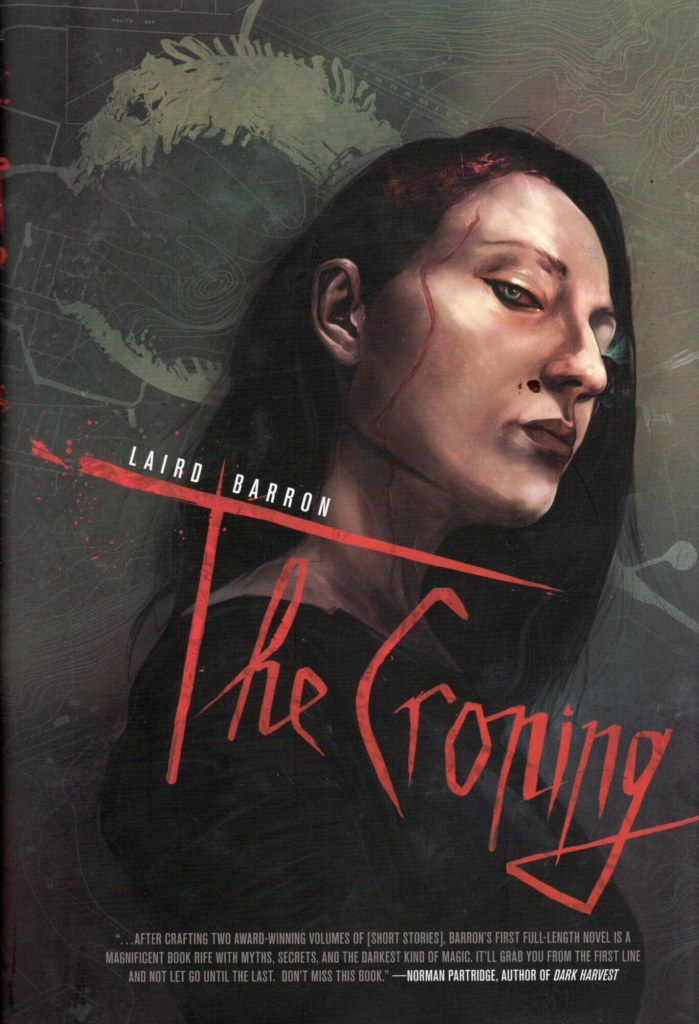
Published by Night Shade Books, The Croning turns marriage, memory, and old age into pieces of an ancient conspiracy. Donald Miller slowly discovers that someone may have deliberately concealed parts of his past.
Barron’s horrors are not sleeping gods waiting to awaken. They are active predators with families, agreements, appetites, and plans. Even worse, they may have shaped Donald’s entire life without his knowledge.
Narrated by Emily Zeller
Emily Zeller uses a cool, measured tone that suits the novel’s fractured memories and domestic secrets. She does not push the horror forward. Instead, she allows it to gather behind family stories and ordinary conversations.
Her controlled characterization works especially well for Michelle. Affection, manipulation, and ancient purpose can exist within the same sentence.
Some listeners have reported distracting pronunciations. For that reason, sampling the recording first may be useful. Nevertheless, Zeller’s deliberate style complements Barron’s slow construction of dread.
Why it matters: The Croning suggests that cosmic forces can shape an entire human life without revealing themselves.
Best for: Secret histories, unreliable memories, family conspiracies, and ancient cults.
Listen to The Croning on Audible
At the time of writing, this title may be included with an Audible membership. Check the current listing for availability.
5. The Sea of Ash by Scott Thomas
A Book That Smells of Salt and Decay
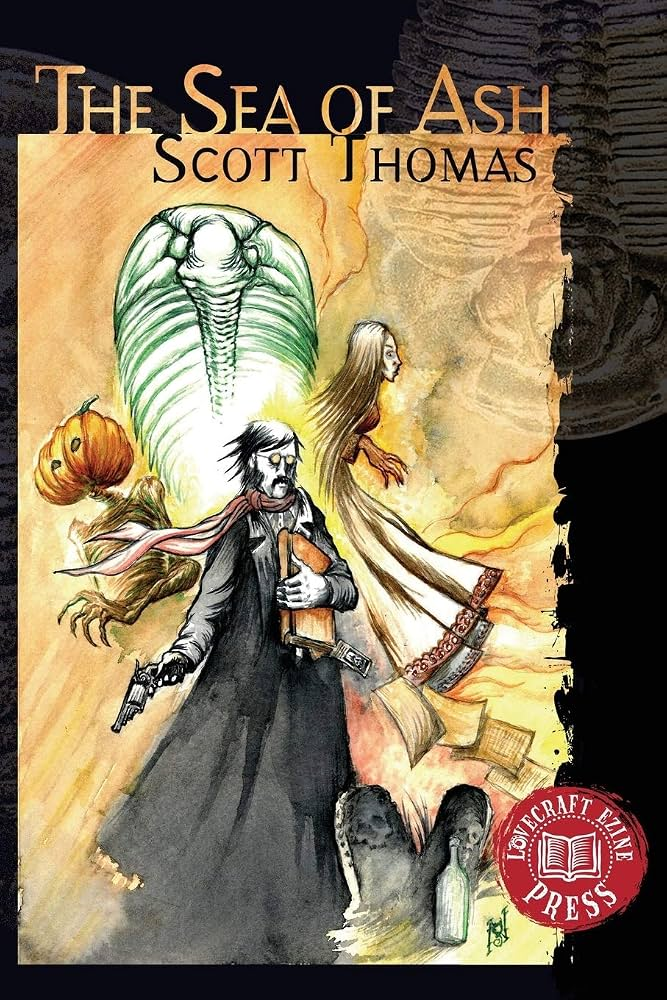
Published by Lovecraft eZine Press, The Sea of Ash follows a collector of arcane books. He retraces the steps of men who encountered realities beside our own.
Their records describe impossible organisms and neighboring dimensions. Although the novella is short, it suggests an enormous hidden history. It feels like a recovered document that should have remained sealed inside a private archive.
Narrated by Leeman Kessler
Leeman Kessler brings unusual authority to the story. Lovecraft enthusiasts know him for portraying H.P. Lovecraft in the long-running Ask Lovecraft project.
His diction is precise, while his theatrical style suits a narrative recovered from an occult archive. Kessler also makes elaborate language feel natural when spoken.
He delivers impossible biology with the confidence of a scholar presenting accepted facts. Perhaps most disturbing of all, he sounds entirely comfortable describing neighboring dimensions.
Why it matters: This compact story captures the pleasure of a classic Lovecraftian investigation while creating its own mythology.
Best for: Arcane research, parallel dimensions, impossible lifeforms, and shorter listening sessions.
Listen to The Sea of Ash on Audible
6. The Immaculate Void by Brian Hodge
The Stars Have Noticed Us
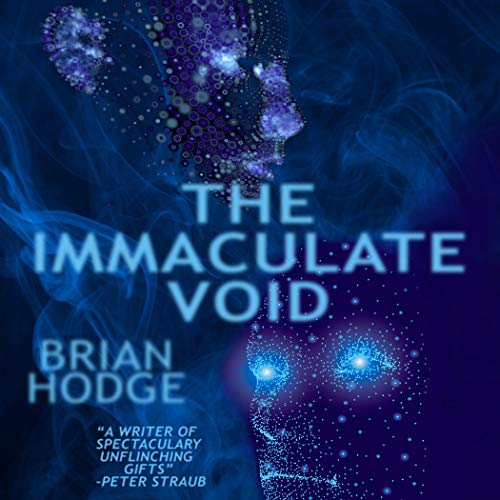
The Immaculate Void connects trauma, murder, planetary events, and the nature of consciousness. The story begins with recognizable human cruelty. Then it reveals a much larger and less forgiving pattern.
The characters are not chosen heroes standing at the center of creation. They are vulnerable people who have attracted the attention of forces operating beyond human scale.
Narrated by Grahame Bywater
Grahame Bywater gives the audiobook a restrained and emotionally distant performance. He does not dramatize every act of violence. Instead, he maintains a bleak steadiness as the connections become visible.
That approach will divide listeners. Some may find it cold and appropriately fatalistic. However, others may find the limited variation too close to monotone. Listening to the sample before using a credit is a good idea.
When the performance works, Bywater sounds like a witness recording events that have already reached their conclusion. His detachment reinforces the novel’s cruelest idea. Humanity is not the center of this story.
Why it matters: This emotionally brutal novel never allows its largest ideas to eclipse its human victims.
Best for: Conspiracies, existential terror, damaged characters, and a bleak vision of the universe.
Listen to The Immaculate Void on Audible
7. The Wide, Carnivorous Sky and Other Monstrous Geographies by John Langan
Every Story Opens a Different Door
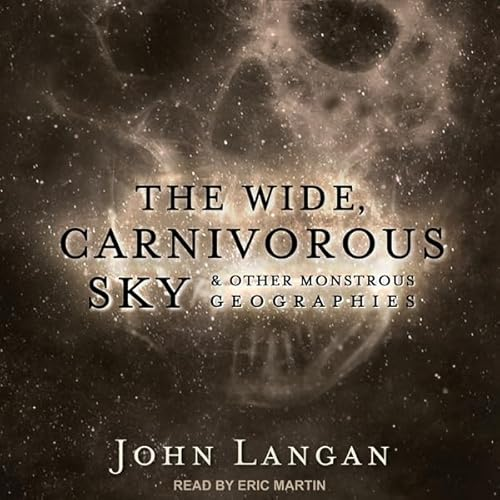
Published by Hippocampus Press, this collection shows how many forms modern cosmic horror can take. John Langan places the weird inside war stories, lectures, vampire tales, family tragedies, and self-aware fiction.
Together, the stories form a map of dangerous territories. Each one opens another route into the unknown. Unfortunately, not every route leads back.
Narrated by Eric Martin
Eric Martin brings versatility and a strong literary sensibility to the collection. He has narrated close to one hundred audiobooks. In addition, he is an AudioFile Earphones Award winner and an Audie Award finalist.
That range matters because Langan constantly changes genre, setting, and narrative form. Martin moves between soldiers, professors, investigators, monsters, and unreliable witnesses.
During action scenes, his delivery gains urgency. In academic passages, it becomes precise and analytical. Later, when the stories enter cosmic territory, he slows down and gives each revelation room to expand.
Why it matters: The collection proves that cosmic horror is a way of confronting uncertainty, not a rigid formula.
Best for: Experimental structures, literary horror, soldiers, vampires, and monstrous reinterpretations.
Listen to The Wide, Carnivorous Sky on Audible
8. A Song for the Void by Andrew C. Piazza
There Is Something Above the Ship
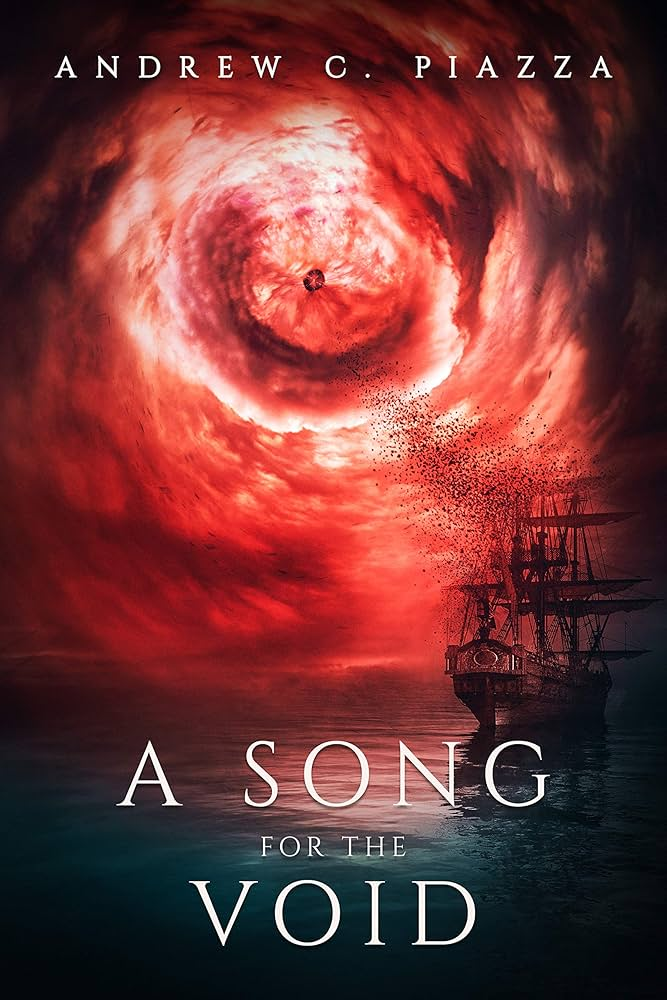
A Song for the Void places cosmic horror aboard a nineteenth-century warship during the Second Opium War. The ship is already an isolated world shaped by discipline, violence, addiction, and colonial ambition.
Then an inexplicable celestial phenomenon appears. Soon, the crew’s weaknesses become openings through which something incomprehensible can enter.
This is not simply Lovecraft at sea. Instead, it is a voyage into obsession beneath a sky that may be changing its mind about humanity.
Narrated by Wesley Mallin
Wesley Mallin brings the authority of a veteran BBC voice actor to the production. His formal British delivery immediately supports the historical setting.
Mallin handles naval language, military hierarchy, and philosophical arguments with clarity. First, his measured performance establishes a world governed by discipline and reason. Then he allows that order to erode.
Fear enters through shortened breaths, altered pacing, and voices that lose their confidence. Mallin begins with the voice of civilization. By the end, he has guided listeners somewhere civilization has no meaning.
Why it matters: The audiobook combines history, addiction, isolation, and celestial terror in an ambitious independent production.
Best for: Maritime horror, historical fiction, doomed expeditions, and supernatural warfare.
Listen to A Song for the Void on Audible
9. DRILL by Scott R. Jones
Unauthorized Work Is Being Performed on Reality
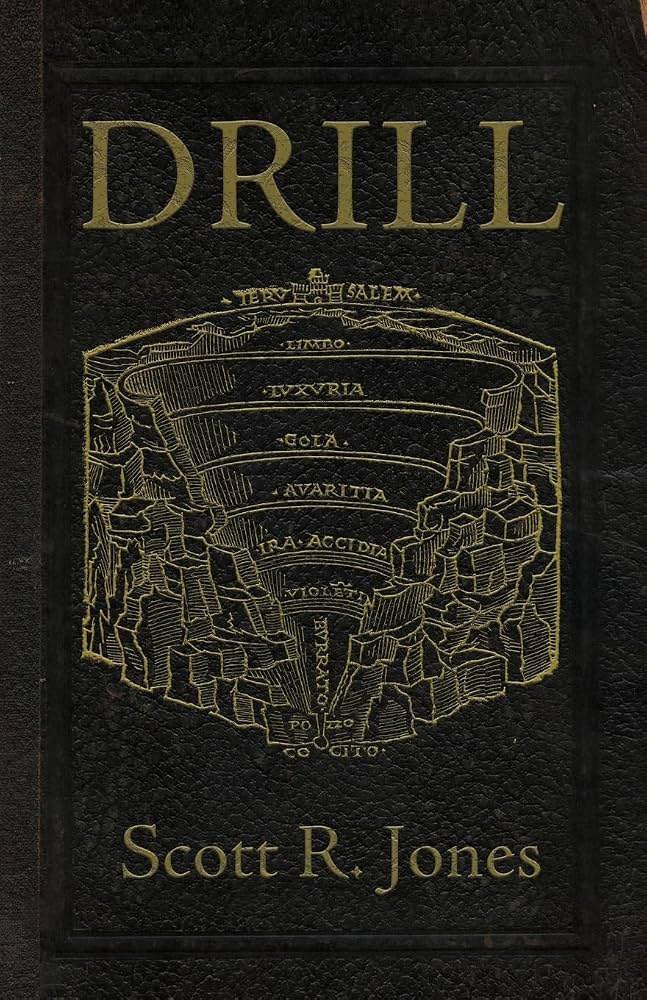
Published by Word Horde, DRILL enters the experimental end of independent cosmic horror. Occult ritual, theology, conspiracy, absurdity, and metaphysical violence collide in a novel that refuses to behave properly.
The description “magical mailman kills God” offers a useful warning. However, it cannot prepare listeners for the full unauthorized renovation of reality.
Narrated by Scott R. Jones
The Audible edition linked here is narrated by author Scott R. Jones. Therefore, the performance carries the energy of an independent creator personally conducting his metaphysical vandalism.
Jones knows the rhythms of his language because he built them. He understands when occult terminology should feel serious and when absurdity should rise to the surface.
His performance can sound conspiratorial, confrontational, and strangely welcoming. It is as if he opened a hole in reality, destroyed the safety equipment, and stayed behind to provide commentary.
Before purchasing, confirm that the linked listing credits Scott R. Jones as the narrator. Other audio editions may exist.
Why it matters: DRILL demonstrates the freedom independent publishing gives writers to pursue unsafe and unconventional ideas.
Best for: Occult conspiracies, theological weirdness, dark humor, and improper maintenance of reality.
10. There Is No Antimemetics Division by qntm
You Have Read This Section Before
Before reaching traditional publishing, There Is No Antimemetics Division grew from independently published online fiction. It also emerged from the collaborative culture surrounding the SCP Foundation.
Its central threat is information that resists being remembered. Humanity may already be fighting a war against these entities. However, every discovery can vanish from the minds of the people responsible for fighting back.
Empty rooms, unexplained wounds, and missing coworkers become evidence of encounters nobody remembers having.
Narrated by Rebecca Calder
Rebecca Calder uses a cool, controlled style that makes impossible concepts sound like workplace procedures. This choice is essential to the audiobook’s success.
The story contains memory-destroying entities, hostile ideas, and impossible security protocols. A performance built around constant shock could make those concepts feel exaggerated. Instead, Calder treats them as facts that must be documented before they disappear.
As the situation deteriorates, fear enters her voice without destroying its professional foundation. Each crack in that control becomes significant.
Calder sounds trustworthy, competent, and strangely familiar. The problem is that you may have met her before.
You simply do not remember.
Why it matters: The audiobook charts a new path for weird fiction, from online collaboration to professional publishing and audio.
Best for: The SCP Foundation, anomalous organizations, memory horror, and high-concept science fiction.
Listen to There Is No Antimemetics Division on Audible
Why Independent Cosmic Horror Audiobooks Matter
H.P. Lovecraft helped define cosmic horror through forbidden knowledge, ancient civilizations, and an uncaring universe. Cthulhu became its most famous symbol. However, Lovecraftian horror has never depended on one sleeping god or tentacled monster.
Today’s independent writers continue Lovecraft’s central ideas without simply summoning Cthulhu again. They find cosmic horror beneath cities, inside damaged memories, aboard warships, and within hostile information. Above all, they confront the limits of human understanding.
Modern creators are also pushing the genre beyond Lovecraft’s prejudices. Queer writers, writers of color, and experimental artists use cosmic horror to explore identity, grief, violence, and survival. Therefore, the unknown can remain terrifying without making human difference the source of that fear.
Small Presses Open Dangerous Doors
Independent publishers preserve the dangerous edge of weird fiction. They release books that may be too personal, strange, or ambitious for a corporate formula.
Without small presses, many important works of modern Lovecraftian horror might never reach an audience. These publishers take risks on unconventional voices and difficult themes. They also support monsters that cannot easily become franchises.
Narrators give those books another life. Their performances transform written language into whispered testimony, intercepted transmissions, occult lectures, and final confessions.
Supporting independent cosmic horror audiobooks means supporting an entire creative chain. That chain includes authors, publishers, narrators, producers, editors, and cover artists.
Support Independent Horror
At Weird Howard Productions, we understand the determination required to create outside the mainstream. Independent filmmakers and small-press authors both build enormous worlds with limited resources. As a result, they depend on audiences willing to seek out unusual work and support it directly.
If one of these books interests you, buy it or review it. Recommend it to another horror fan. You can also purchase a physical edition directly from its publisher. In addition, follow the writers and narrators, visit independent bookstores, and subscribe to small-press newsletters.
Cthulhu may continue dreaming beneath the Pacific. Meanwhile, Lovecraftian horror is wide awake. Independent voices are carrying it beyond Lovecraft’s mythology and into entirely new abysses.
Support independent horror now.
The darkness is always looking for new storytellers.
The Fire Is Dying
The final recording ends. Outside, the rain has stopped. The gramophone needle circles through an empty groove while the fireplace collapses into red embers.
These stories came from independent authors and small presses. Skilled performers then carried them from the page and placed them directly into our ears.
The needle lifts. The static stops.
From somewhere inside the wall, the story continues.viewing it, recommending it to another horror fan, or purchasing a physical edition directly from its publisher. Follow the writers and narrators. Visit independent bookstores. Subscribe to small-press newsletters. Tell people about the strange book that kept you awake.
Cthulhu may continue dreaming beneath the Pacific, but Lovecraftian horror is wide awake. It is evolving through independent voices that are willing to travel beyond Lovecraft’s mythology and stare into entirely new abysses.
Support independent horror now.
The darkness is always looking for new storytellers